
Why an H-Alpha Converted Camera Is the Most Impactful Upgrade for Deep Sky Astrophotography
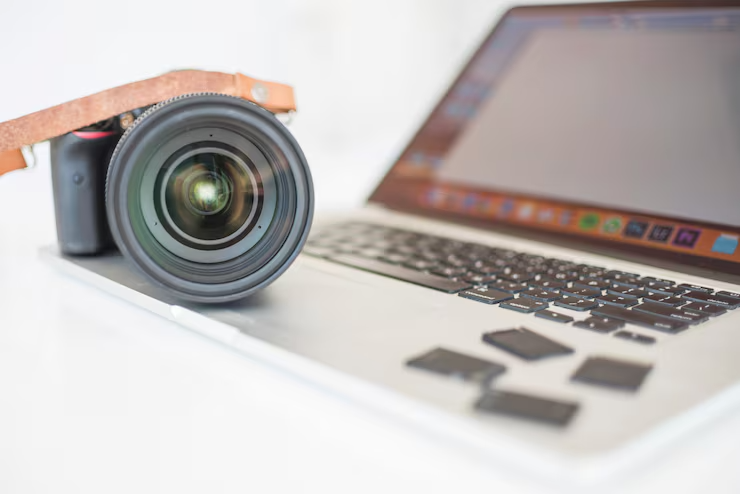
Ask any group of experienced deep sky astrophotographers what single upgrade made the biggest difference to their imaging results and the answer that comes back most consistently is not the mount, not the telescope, and not the dedicated astronomy camera that costs more than everything else combined.
It is the h-alpha converted camera.
This surprises people who are newer to astrophotography. A camera conversion sounds like a niche modification for specialists with very particular requirements. The reality is that it addresses one of the most fundamental and universal limitations in deep sky imaging with a DSLR or mirrorless camera, and it does so in a way that is immediately visible in your data from the very first night you use a properly modified body.
Here is why the h-alpha modified camera upgrade consistently outranks everything else when experienced astrophotographers reflect honestly on their equipment journey.

The Limitation That Has Been Holding Your Images Back
Before understanding why an h-alpha converted camera makes such a significant difference, you need to understand the specific problem it solves. Because once you understand the problem clearly, the solution and its impact become immediately obvious.
Every stock digital camera ships with a filter installed directly in front of the image sensor. This filter blocks infrared light from reaching the sensor, which is entirely appropriate for normal photography purposes. Without it, infrared radiation would cause color problems in daylight images and your photographs would look wrong in ways that most people would find unacceptable.
The problem for astrophotography is not the infrared blocking itself. It is the wavelength at which the filter begins attenuating light. The hydrogen-alpha emission line, the wavelength at which ionized hydrogen emits light and the emission responsible for the red and pink structures in emission nebulae, sits at 656 nanometers. This wavelength is right at the boundary where the stock camera filter begins rolling off sensitivity.
Depending on the specific camera model, the stock filter reduces hydrogen-alpha sensitivity by somewhere between fifty and eighty percent. When you photograph an emission nebula with a stock camera, you are capturing between one fifth and one half of the hydrogen-alpha signal that the object is actually producing. The rest is being filtered out before it ever reaches your sensor.
An h-alpha converted camera removes this filter and replaces it with one that passes hydrogen-alpha wavelengths fully to the sensor. The result is not an incremental improvement. It is a fundamental change in what your camera is allowed to see.
Why This Matters More Than Other Upgrades
Equipment conversations in astrophotography often focus on aperture, focal ratio, mount accuracy, and sensor specifications. All of these things genuinely matter. But they all operate within the constraints of what your camera is actually allowed to record. An h-alpha modified camera changes those constraints, and that is what makes it uniquely impactful.
Consider what happens when you upgrade your telescope. You get more light gathering capability, better resolution, or a wider field of view depending on which direction you go. These are real improvements that show up in your images. But they are improvements to how efficiently you capture the signal that your stock camera is allowed to record. If the stock filter is blocking seventy percent of the hydrogen-alpha signal from your target, a bigger telescope gathers more of the thirty percent that is getting through. The fundamental limitation remains.
An h-alpha converted camera addresses the limitation rather than working within it. Instead of capturing thirty percent of the available hydrogen-alpha signal more efficiently, you capture close to one hundred percent of it. The change happens at the sensor level, which means every other element of your imaging system, your telescope, your mount, your filters, benefits from it simultaneously. The whole imaging chain performs better because the detector at the end of it is finally receiving what the universe is actually sending.
This is why astrophotographers who have made multiple equipment upgrades consistently rate the h-alpha converted camera as the most impactful single change they made. It was not the most expensive upgrade, and it was not the most technically complex. But it changed what their camera could see, and that changed everything that followed.
The Targets That Become Genuinely Accessible
One of the most practical ways to appreciate what an h-alpha modified camera makes possible is to think about specific objects in the deep sky catalog and how they respond to the improvement in hydrogen-alpha sensitivity.
The California Nebula is perhaps the most dramatic example. This object emits almost entirely in hydrogen-alpha and very weakly in other visible wavelengths. A stock camera produces thin, pale, unconvincing results on this target regardless of how much exposure time is invested. An h-alpha converted camera transforms it into a rich, detailed, rewarding subject that rewards long integration times with genuine data depth.
The Cygnus region of the sky contains some of the most spectacular emission nebulosity visible from northern hemisphere locations. The North America Nebula, the Pelican Nebula, the Cygnus Wall with its dramatic hydrogen-alpha structures, and the vast network of emission filaments that extend across the constellation are all hydrogen-alpha dominated targets that respond dramatically to the improved sensitivity of an h-alpha converted camera.
The Vela Supernova Remnant, the Sharpless catalog objects, the vast majority of the emission nebulae that define serious deep sky astrophotography catalogs, all of these objects produce dramatically better results with an h-alpha modified camera than with a stock body. And the objects that were already popular with stock cameras, the Orion Nebula, the Lagoon, the Trifid, become even richer and more detailed when the camera recording them is finally sensitive to the full range of their hydrogen-alpha emission.



Your digital compass in the tech universe, Wired Gadgets 360 delivers expert insights on AI, app development, mobile technology, cybersecurity, and innovations that matter.

